Friday, 9 April 2010

Eritrea fishery sector: An untapped and renewable gold mine

I first visited Eritrea in 2008 and it was love at first sight. In December 2009 when I landed in Asmara airport, I felt like I was back home. I spent my first couple of days visiting the irrigation schemes in zoba Debub and then went east to zoba Northern Red Sea where I visited Massawa, the capital city of Northern Red Sea Zoba which is the centre of Eritrea’s fishing industry. Massawa is one of the hottest places on earth, with temperatures soaring well above 40C (104F) and 80% or more humidity for much of the year. Yet, like rest of this beautiful country, it has its charm.

Eritrea is a relatively rich country in terms of natural resources. It has gold, potash, zinc, copper and salt. What is perhaps less known is the fact that Eritrea also has significant fisheries resources and that 20% of the coastal population’s livelihoods depends on fisheries. However, unlike the gold or copper, fisheries resources, if properly managed, can continuously provide food, employment and income to the coastal communities.

Eritrea’s 1,200km coastline is highly favourable for artisanal fishing offering rich and varied fish stocks and sheltered fishing grounds. Unlike artisanal fishers in other parts of the world, Eritrean fishers have not overexploited their resources and could potentially increase their catch from the few thousand tons per year to at least 40,000 if not 80,000 tons per year.

Their fish stocks include lizard fish, threadfin breams, and catfish (soft bottom demersal); snappers, emperors, grunts, job fish and groupers (hard bottom demersal and reef fishes); sardines and anchovies (small pelagic); tunas, mackerels and sharks (large pelagic); shrimp, crabs, lobsters (crustaceans); and squids and octopus and cuttlefish (cephalopods).

“Eritrea’s fisheries sector has the potential to contribute substantively to our national food security and can play an important role in reducing poverty in coastal areas”, says Andom Ghebretensae, Director-General Regulatory Services. “Currently we have 3,000 licensed artisanal fishers. Eritrea’s coast not only is rich in fisheries resources but also has great potential for tourism.”

The Government of Eritrea has long recognized this potential and in collaboration with a number of donors such as the African Development Bank and the European Union has built EU standard landing and processing sites. These sites are fully equipped with processing and storage facilities, where trained personnel weigh, process and grade the catch.

Eritrea’s fish exports may have been low in recent years (approximately 234mt in 2008), however, thanks to the upgrading of landing and processing facilities, today Eritrea is eligible to export fish products to European Union countries.

Eritrean artisanal fishers aspire to become entrepreneurs
Eritrean artisanal fishers use two types of fishing boats – houris or sambuks. Houris constitute 80% of the fishing fleet. These are wooden boats and measure anywhere between 8-13 metres. It has an outboard engine and can take up to five people on board.

Sambuk, 16 metre wooden boat with an inboard engine, constitute approximately 9% of the fishing fleet. Sambuks can take up to nine people on board.

The remaining 11% is made up of fibreglass reinforced plastic boats imported from Saudi Arabia or Yemen, although some are also being built in Eritrea.

“I have a traditional wooden boat called a houri which I bought thanks to a 5 year loan”, says Ahmed Hamid, an artisanal fisher. “There are three of us and with our boat we can go between 8-10 kilometres from the shore and we can always count on an average catch of 800 kilos”.

“During the fishing season – which is approximately seven months – we make about 2-3 fishing expeditions per month. We use small nets and usually stay out in the sea for an average of 10 days”, explains Hamid

“We buy ice from Massawa Fish Landing centre for 0.80 nakfa per kilo and use it to preserve the fish on board”, says Hamid proudly. “We sell our entire catch to National Fisheries Corporation which then sells it to processors such as Erifish. They buy the snappers for 22 nakfa per kilo and the groupers go for 25 nakfa. And we use 20% of our catch to repay the loan”.

On the landing site, Hamid and his fellow fishers unload their 800 kilo of first class tuna, snappers, emperor and groupers in big blue containers. Their catch is immediately taken next door to the EU certified Erifish processing plant, where a team of 24 people degut, process and packaged the fish for export.

“I have everything I need on my traditional boat – a cellphone, my medical kit and a transistor radio – but I would like to buy fibre glass reinforced boat, so that we can stay a maximum of a month and come back with an average catch of 1.5 tons”, said Hamid with a smile. “And I look forward to the day when I am able to sell part of my catch freely on the market”.

Fisheries sector can help ensure national food security and provide investment opportunities
In Eritrea, meat is the preferred source of protein. Fish consumption is estimated at 0.5-1kg/person/year which is low compared both to the average Africa consumption, estimated at 8kg/person/year.

“We need to encourage our people to eat more fish and to consider fish as an alternative source of protein”, says Seid Mohamed Abrar, Director, Office of the Minister of Marine Resources.

“We have high market value fish and we can fish approximately 80,000 tons per year without any risk of depleting the fish stock”, says Abrar. “By exploiting our fisheries resources, we can contribute to ensuring food security for our coastal population and help the artisanal fishers to improve their livelihoods.”


This is why the Government of Eritrea requested IFAD’s assistance to design a fisheries development project to support artisanal fishers in the Red Sea coastal regions.

“The IFAD-funded Fisheries Development Project under the auspices of the Ministry of Marine Resources will reorganize and strengthen fishers’ cooperatives and support artisanal fishers so that they can increase their incomes and improve their food security”, says Abla Benhammouche, Country Programme Manager for Eritrea. “This project will help Minister of Marine Resources to make the fisheries sector sustainable and at the same time reduce illegal, unregulated and unreported fishing.”

The Fisheries Development Project will build the capacity of fishers such as Hamid and equip them with modern fishing techniques and better and secure boats and fishing gears. At the same time, the project will encourage private sector initiatives to add value to the processing and packaging process, also build the capacity of Erifish to better market the catch domestically and expand their export markets.

To support private sector investment, artisanal fishers such as Hamid will be allowed to sell 20% of their catch to private processors and traders, with the prospect of increasing this percentage as private sector further develops.

Last but not least, private sector investment can help transform Eritrea’s Red Sea coast into a flourishing tourist resort, offering spectacular diving opportunities and uncontaminated beaches. “We can become a viable rival to other Red Sea resorts such as Sharm el-Sheikh”, says a proud Abrar.

Legacy of a visionary American biologist: Mangroves for all
During World War II Dr Gordon Sato, a biologist spent some time in a concentration camp called Manzanar in California desert. During his internment he developed his vision of eradicating hunger by enabling African nations to feed themselves. He invested half a million dollar of his own money in the Manzanar Project.

This visionary philanthropic scientist conceived this project as low-tech solution to hunger and poverty and to combat the impact of climate change, when climate change was neither on the international agenda nor on the talk of the town!

The project started during the 30-year war to win independence from Ethiopia. Sato first joined the Eritrean fighters in 1987 and introduced fish farming. He succeeded in growing fish and providing high protein food for the wounded. After the war, he focused on issues related to economic development and applied what he knew best - biological principles - to develop a self-sufficient economy in a country that is prone to drought and famine.

However, soon he saw the potential of mangroves to increase food production all the way up the food chain.

In an interview, Sato said: “I was in an area with mangrove trees, and I noticed the camels eating them. I got the idea that the trees could also supply food for sheep and goats. There was lots of available space for growing mangroves, so it seemed like an obvious solution. Initially, I had to figure out how best to grow them and how to make the mangroves good food. We found that mangroves would be adequate food for livestock, as long as they were supplemented by a small amount of fish meal prepared from fish waste.”

Years later, thanks to the Manzanar project and Sato’s legacy, Eritreans are using fresh leaves and dried mangrove seeds as livestock feed. This project has also taught herders that the seaweed that washes up on shore can be dried, processed and used as animal feed.

Ammanuel Yemane, Manzanar project manager, takes pride to showcase Sato’s teaching. Sato and his team reached the conclusion the mangroves were growing in areas where rainwater was washing into the sea. The rain was providing nitrogen, phosphorous and iron - elements lacking in seawater. The team buried the seeds with a piece of iron and a punctured bag of fertiliser rich in nitrogen and phosphorous and saw the mangroves flourishing.

Today, Yemane and his team work with women, men, herders and fishers of Hirgigo village to teach them how to use the same technique to plant mangroves so that they can effectively address sustainable resource issues such as providing food for livestock, protecting the fish and preventing deforestation. “The village is now learning to manage the mangroves and we can recover the lost mangroves in approximately 6 months”, comments Yemane

The IFAD-funded Fisheries Development Project will join forces with Yemane and his young group of dedicated and passionate Eritrean to support the rehabilitation of the mangroves and to:

  • build capacity of fishers to develop viable and sustainable business plans
  • teach fishers how to protect marine natural resources such as the coral reefs
  • teach fishers to form cooperatives
  • organize exchange visits

A brighter future
Through out their history Eritrean people repeatedly have shown their resilience and resoluteness. It goes without saying that they will be able to unleash the potential of their untapped gold mine - their fisheries sector – in the most sustainable manner and as a result contribute substantively to improve the livelihoods of the coastal population and create a vibrant local private sector.


Watch short video of Eritrean fishers unloaded their first class catch

Monday, 15 March 2010

Social media is rural development’s best friend!

The advent of social media and Web 2.0 has democratized how citizens interact with people in power, be it members of parliament, donor organizations, international bodies, civil society and the media. Social media tools have paved the way for citizens to build a “personal” relationship with their rulers and their peers. These tools allow everyone – those in power and the normal citizens - to create and share content and add value to the political, social and economic debate.

Those reading this blogpost know very well that Web 2.0 started as a massive social experiment. Today we’ve gone beyond the experiment. Social media and Web 2.0 are now part and parcel of our daily lives and thanks to this revolution, citizens in urban and rural areas are in an unprecedented position to have their voices heard!

Last February 2010 I had the honour and pleasure of talking with CNN’s anchor and correspondent, Jim Clancy on how social media has changed mainstream media. During our conversation, Clancy pointed out that mainstream journalists use social media to “mine” information and to “get the temperature”.

Over the last months, we’ve seen how citizens in countries where social media tools are banned have found inventive ways of sharing their message with the outside world. We have also seen that restrictions on the export of technology related to the use of internet-based communication have been lifted in the US to boost free flow of information in Iran, Sudan and Cuba. Since these tools are open and accessible, they’ve become a catalyst for transparency and accountability. And thanks to their egalitarian nature the farmers in rural areas, just like the urban activists in capitals have the same opportunity to have their voices heard.

Social media is allowing development workers to capture in real time emerging needs and trends and at the same time allows development workers to disseminate their messages and appeals in real time. A case in point is the appeals via Twitter for the devastating earthquake in Haiti.

At the same time, more and more development organizations are using a variety of social media tools to report live from events and to solicit comments and feedback. For example, last month, the International Fund for Agricultural Development (IFAD), used a number of social media tools and social reporting methodology to report live from the third global meeting of the Farmers’ Forum and the thirty-third session of its Governing Council. IFAD’s social reporting team, composed of 10 volunteers, attended the various sessions and brought the meeting live to those who could not attend, through Twitter, photography, videos and through IFAD’s social reporting blog.

Together with Clancy who moderated a high-level panel discussion on "From summit resolutions to farmers' fields: Climate change, food security and smallholder agriculture", the IFAD’s social reporting team solicited questions via Twitter, which Clancy then fielded to the panellists and the audience, one from @mobimonkey and another from @mongkolroek.

For me, IFAD’s social reporting experience demonstrated how social media tools contribute to giving development a new participatory approach which goes beyond just words but is rooted in action.

If yesterday, we only needed to engage with governments and with grass-root communities, today, we have to engage with all those who wish to engage with us and have something to say. What has changed is that as development workers we have to continuously and consistently be “listening” to what people have to say.

Before the advent of social media, we could have afforded brushing off comments made in third-tier media. Today it is hard to ignore a farmer’s organisation blogpost or a comment on Twitter, because ignoring a comment or an observation can have a negative snowball effect. This means we need to be equipped to deal with feedback and criticism in a constructive and timely manner. This also means that today more than ever, development is a joint effort and there is an extended development community which includes all actors and most importantly the people who we serve and need to reach.

I believe that if international and development organizations fail to embrace social media they will become irrelevant in no time. We not only need to have our ears on the “social media tools” to hear and see what others are saying about us, about our partners and stakeholders, but also have to use these tools to influence policies, to set trends, advocate for eradicating rural poverty and advocate for smallholder farmers and the poor rural people whom we serve.

In concluding, I believe that social media is perhaps one of the greatest allies of development workers. Today we can get our messages out immediately through Twitter and through blogs. Our PowerPoint presentations are available on tools such as Slideshare, photos from our projects and programmes are readily available through Picasa and Flickr and everyone can see our achievements and challenges through our videos available on YouTube and Blip TV. At the same time, we have the opportunity to hear first hand and listen in real-time to issues and challenges as they emerge. We are in a position to get FIRST HAND information. We need to harness all this wealth of knowledge to fulfil our mandate of eradicating rural poverty and ensuring food security for all.

Wednesday, 17 February 2010

Interview with CNN anchor Jim Clancy: How has social media changed mainstream media

This week I had the honour and pleasure to meet CNN's Jim Clancy. Yesterday, I asked if I could interview him about social media. Jim, being very modest, said he does not know much about social media.... But I can tell you he knows A LOT and he's an advocate for social media.

This morning he kindly agreed to grant an interview. You can't imagine my excitment. A little nobody interviewing the famous Jim Clancy.

It was a pleasure to work with Jim. He is such a pleasant and humble person.

Monday, 18 January 2010

The unique challenges of #Haiti’s emergency logistics

Over the last days I’ve been so frustrated by media reports out of Haiti pointing fingers at aid workers and my UN colleagues. I’m lucky enough to have a sister who did her doctoral thesis on logistics of humanitarian organization during disaster response. So I asked her to write a piece explaining the complexity of a relief operation in Haiti’s context.

Here is what she had to say:


As the aftermath of the Haiti earthquake unfolds, the media highlights the lack of adequate response by humanitarian organizations to the needs of the population. ‘Logistics’ and ‘coordination’ are often named as the two areas where humanitarian organizations have failed in. But don’t humanitarian organizations have the experience to mobilize relief resources and stage an adequate response? After all they have been confronted with large-scale and complex disasters such as the 2004 Tsunami and the Iraq and Afghanistan emergencies before. So, what can explain the delay in relief efforts by humanitarian organizations? I will first try to illustrate how humanitarian organizations operate and then put their efforts into the context of the Haitian earthquake.

The operations of humanitarian organizations
Most humanitarian organizations typically specialize in one area of relief assistance (food, medicine/medical assistance, shelter, non-food items, etc.) and/or population group (children, refugees, etc.). They are usually not involved in rescue efforts which are conducted by specialized national emergency teams or military forces. Therefore, they cannot be expected to respond to all the needs of all the survivors. What is even more important to appreciate is that the success of any disaster response effort does not fall squarely on the shoulders of humanitarian organizations. This is because humanitarian organizations do not operate in a vacuum but depend on a number of stakeholders to stage their disaster response.

For each disaster, a humanitarian organization establishes its own emergency supply chain. This disaster-specific supply chain consists on a number of activities to be carried out by a range of actors. Humanitarian organizations can be retained responsible for the timely activation and coordination of these activities that continue to depend on the capability and contribution of seven networks of actors. These are the media, donors, relief item suppliers, recipient country, neighboring countries, military forces, and implementing partners. The media through coverage of a disaster often activates an emergency supply chain and is a source of information on its development. Donors provide funds, goods, services and people. Donors together with private sector suppliers provide relief items. Donors, recipient country, neighboring countries and military forces provide logistics assets. Implementing partners, that is the local and foreign NGO community, typically acts as distributors.

In terms of activities, soon after a disaster, a humanitarian organization carries out a group of activities. With a view to plan its relief effort, it assesses the needs of the population and prepares an initial appeal targeted at the donor community to mobilize resources. After having mobilized cash, people, services, information, relief items and in-kind donations, it ensures their transportation to the disaster site. Both procured and solicited in-kind donations are stored in warehouses before distribution to the population. It is worth noting that planning does not occur once, that is, at the outset of a disaster but is a continuous activity.

The humanitarian community has long identified coordination and logistics as two critical areas for disaster response success. The UN’s Office for Coordination of Humanitarian Affairs (OCHA), established by the UN’s Secretary General in 1998, functions as a coordination platform for the humanitarian community during all emergencies. OCHA provides a number of common services to the humanitarian community. It is the secretariat for four coordination mechanisms and tools: the Consolidated Appeal Process, the Central Emergency Relief Fund, the UN’s Disaster Assessment Coordination teams, the Humanitarian Information Centre and Military and Civil Defense Unit.

The complexity of more recent humanitarian crises has led to the unbundling of logistics from generic coordination. For over a decade, the humanitarian community activated a specialized temporary facility: the UN Joint Logistics Center. To ensure predictable leadership and accountability in key disaster response areas, in December 2005, the policy making organ of the humanitarian community, the Inter-Agency Standing Committee (IASC), endorses the cluster approach which implies the activation of clusters in nine key areas, each to be led by a humanitarian agency. Given its experience in emergencies, the World Food Programme (WFP) is designated as the lead agency not only in the areas of food assistance but also logistics and emergency telecommunications.

Haiti before and after the earthquake
Now let us step back and take stock of the Haitian reality prior to the disaster and the effects of the earthquake on the country.

Haiti is the poorest country in the Western hemisphere and ranks 148th of 179 countries on the United Nations Development Programme Human Development Index. Prior to the disaster, out of approximately 8.5 million Haitians, one million was already dependent on foreign aid. Haiti does not have any military force which implies lack of army and military assets (e.g. heavy duty equipment, helicopters). Due to the history of the country, some of the functions of the government and its institutions have been overtaken and carried out by a host of NGOs.

The epicenter of the destructive earthquake which struck Haiti on 12 January 2010 is 22 km from the capital city of Port-au-Prince and 15 km from the other major urban centers; the most densely populated area of the country. (The capital city alone accounts for 2 million people). The earthquake is estimated to have killed 200,000 people and left behind an unparalleled number of severely injured survivors requiring medical attention and assistance. An approx. 3 million survivors, most of which inhabitants of shanty-towns, that is, the poorest of the poor, require everything from water, food to shelter and psychological support. As the quake has hit the capital city, government, UN, NGO community and private sector operators have all suffered from human losses and damage to their infrastructure such as offices, shops and equipment. The port, airport and the road network are severely damaged. The capital city’s water supply and electricity systems have collapsed, leaving millions of people without access to safe water. Only one hospital in the city appears to be functional. With a disbanded police force and significantly reduced UN security workforce (100 staff still unaccounted for), there is no force to ensure safety and security.

A logistical nightmare
The response of the international community to the disaster is heartening both in terms of speed and size. Therefore, there is no question of goodwill or lack of resources to stage a relief effort despite the fact that the daily needs - from food, water to shelter - of 3 million people and medical care to the injured have to be met. An effective response is being held back by the logistical challenges confronting those on the front-line. Operators deployed for the occasion are aware of how these challenges can quickly trigger into mass revolts, further undermining any possibility of an orderly relief effort.

What becomes clear from the above is that humanitarian organizations cannot be held responsible for logistical failures. The sheer infrastructure devastation left behind by the earthquake and lack of local manpower and equipment to remove rubble from roads and repair critical infrastructure undermines significantly the speed and scale of any relief efforts to be staged by the humanitarian community.

Luckily, soon after the disaster, the damaged airport control tower was repaired to allow aviation operations to resume. Given the limited size and capability at the Haiti airport, the humanitarian community obtained the necessary authorizations to fly relief items to the Dominican Republic. However, the international response to the disaster has congested the two airports delaying the delivery of key equipment and supplies even to the aid operators already on site. Given longer repair times, the port continues to be out of use. As a result, vessels already at the coast are not in a position to off-load their cargo of relief items.

Lack of on-site transport assets such as trucks and dwindling supply of fuel further limits the ability of humanitarian organizations to transport goods from the airport towards the population. Moreover, given the overall destruction, the humanitarian community requires time to identify storage centers and set up secure and safe distribution centers. As mentioned above, usually the large UN relief organizations depend on the NGO community for distribution of relief items. As the earthquake has also affected this particular set of actors, the humanitarian organizations need to fly-in or identify qualified staff to man these centers. Finally all the above has to be carried out in an insidious and volatile security environment.

Coordination in the context of a dominating donor
Response to a logistical nightmare is effective coordination. The success of the humanitarian operations depends on i) how well the community manages the logistics bottlenecks caused by limited infrastructure and high demand on its use, and ii) how effectively it can prioritize the movement of people and goods necessary to avert any social uprising.

In its lead capacity on the logistics cluster, throughout the Haiti crisis, WFP will manage the passenger air service, provide information on the transport network and coordinate the operations of the humanitarian organizations among each other and that with the Government of Haiti. Given the huge contribution of the US through its military, it also needs to coordinate and de-conflict the humanitarian community’s response with that of the US military. This leaves behind private and bilateral donations. As far as the EU is concerned, Italy appears to take on the coordination role among European countries. It is unclear who will deal with the other donations, which if not coordinated will only add to the chaos and aggravate the situation at key entry points such as airports and ports.

The speed and scale of the US’s response to the disaster in terms of funds, goods and military support is unprecedented. This is both a blessing and a curse. It is a blessing as the US military will have the means to reestablish a safe and secure environment for humanitarian organizations to operate in and bridge the command and resource gap left behind by the Haitian government. It is a curse as with its huge resources it will dominate the relief effort, overshadowing others, and monopolize the use of the limited logistics assets as exemplified by the current ‘exclusive’ use of the Haitian airspace.

Conclusion
I hope by now we can all appreciate the complexity of humanitarian response during disasters. Humanitarian organizations are not only conditioned by the environment in which they operate, but also by the actions of other actors. In Haiti, they are operating against all odds. But let us hope that donors with resources required by humanitarian organizations actively participate in the coordination initiatives led by the UN. This is the only way to ensure that relief activities are coordinated, assets are shared and the use and movement of resources are prioritized, thus meeting the needs of the population.

Ramina Samii

Read more at http://www.insead.edu/facultyresearch/centres/isic/documents/TsunamiversusHaiti.pdf


About the Author
Ramina Samii currently works for the OPEC Fund for International Development (OFID), an international development financial institution. Before joining OFID, Ramina worked as a researcher at INSEAD, the international business school. During her time at INSEAD, she conducted research on several topics including supply chain management with particular emphasis on humanitarian logistics. Her research resulted in the publication of articles in academic and practitioner journals as well as numerous case studies. It also constituted the basis for her doctoral thesis entitled: Leveraging Logistics Partnerships: Lessons from Humanitarian Organization.
Ramina holds a PhD in management from Erasmus University, Rotterdam School of Management and a Laurea degree in economics and business administration from the University of Rome, Italy.


Post-script
I hope the readers find this blogpost informative and provide their comments. This way I can show my skeptic sister, that social media is indeed useful and an immediate way of getting your message and knowledge to a wide audience.

Friday, 11 December 2009

Impact of climate change on Eritrean agriculture sector

As world leaders gather in Copenhagen to seal the deal on climate change, I saw, first hand, the devastating consequences of climate change on Eritrea’s agriculture and livestock sector.

Crop cultivation and animal husbandry account for 60 per cent of rural incomes in Eritrea. Recent models and estimates show that the effects of climate change have an adverse impact on the country’s agriculture and livestock sector. Decrease in rainfall and a rise in temperatures has resulted in increased dry spells and decreased soil moisture.


Water scarcity is one of the many challenges that farmers and pastoralist face in Eritrea. The country has two perennial river systems, the Setit River, which forms the country’s border with Ethiopia and drains into the Nile basin, and the Gash Barka system, which collects the run-off water from the highlands. All other rivers in the country are seasonal and carry water only after rainfall, which means that they are dry most of the year. The country has limited sources of fresh surface water, and although groundwater can be tapped, it may be s quantity and quality may be poor.

Official estimates show average annual rainfall at 400-500mm. However, for the last two years, average rainfall has not exceeded 100mm.

Investing in blue gold improves livelihoods of smallholder farmers

To counter the devastating impact of climate change and to ensure food security for its people, the government of Eritrea is investing in the agriculture sector by:


  • creating small-scale irrigation schemes
  • building ponds, reservoirs and dams
  • installing solar panels for water pumps
  • installing drip, pump and sprinkler irrigation systems

For example in Zoba Debub the livelihoods of 82% of the 750,000 people living in this zoba depends on agriculture and related activities. Farmers in Debub like in Ma’ekel and other areas of Eritrea plant cereals such as wheat, barley, sorghum, taf, millet, maize and also vegetables – tomato, onion, carrot, potato, cabbage, lettuce and pepper.

In drought-prone Eritrea, livestock is a farmer’s most valuable asset. Animal husbandry is not only one of the main sources of livelihood for farmers, but it is also a form of insurance that enables poor rural people to cope with drought and other disasters.

One of the many challenges facing Eritrean farmers and pastoralists is to find grazing land and water for their livestock. The reservoirs and the surroundings provide an invaluable source of water and grazing land for livestock.

If you’ve ever visited Eritrea, you will be familiar with its arid landscape. You can imagine my surprise when driving through zoba Ma’ekel and -zoba Debub, against an arid and dry landscape, literary out of the blue I saw a beautiful body of water surrounded by hectares of emerald green and lush vegetation. These mini-oasis which are the result of Eritrean government’s investment in agriculture are THE source of livelihoods and food security for poor rural Eritreans.

The reservoirs can hold anywhere between 50,000 to 350,000 m3 of water and serve 200 to 350 poor rural households who are now able to irrigate their 15-35 hectares of agricultural land. Furthermore, the reservoirs and dams provide a secure source of grazing and water for livestock and also source of water for domestic/washing purposes.

These secure source of blue gold allow farmers to complement their rain-fed crops - cereals, sorghum and barely - with vegetables such as tomatoes, lettuce, cabbage, carrots, onions and pepper.

Eritrean farmers use a variety of irrigation methods ranging from drip to pipe and sprinkler and religiously adhere to the agreed irrigation schedule. Thanks to a favourable government policy, they have the luxury of not paying for water. However, they pay an average of 10,000-15,000 nakfa for a pump and those who have a fuel-run pump benefit from subsidized fuel.

The farmers are cognizant that their livelihoods depends not only on water, high yielding seeds and high-value crops but also on making sure that their pumps are well maintained. To this end they’ve established a revolving fund which is used exclusively for this purpose.

“Thanks to the reservoir now I have a secure source of water and can irrigate my 0.25 hectare”, says Woldo a farmer living in the Shmangus-laalay village. “Now I have three crops instead of one.” Woldo uses a combination of sprinkler and water pump. “When my crop was germinating, I used water pump, because sprinklers can damage the crop”, says Woldo. Woldo’s water pump is run by electricity for which he pays 24 nakfa per hour.

The 350 households living in the vicinity of this reservoir use this body of water not only to irrigate their plots, but also for their livestock and for domestic purposes such as for washing.


Before the reservoir was built, Elsa a mother of three, used to wake up at crack of dawn to go fetch water for washing purposes. Today, in tow with her donkey and her youngest son, she goes to the lake to collect water. While the water collecting technique may be rudimentary, it has saved Elsa hours of walking, allowing her to spend more time at home and to get involved in agricultural activities.

In the nearby village of Tesazege village, Athaneta and her brother are cultivating 0.5 hectare of land using the nearby reservoir. “I practice crop rotation and for this crop cycle I’ve replaced barley with tomatoes, because I have a secure source of water”, says Athaneta with a smile. “I’ve already harvested 100kg and expect to harvest another 200kg which I sell for 2 nakfa per kilo”.

“Thanks to this secure source of water, my brother and I can be sure to have one cereal crop and two vegetable crops”, says Athaneta.

Habtemariam is a model farmer who has fully taken advantage of the nearby reservoir and exploited the potential of his 0.75 hectare land, managing to secure himself and his family a total 5,000 nakfa by planting cabbage, lettuce and carrot.

Eritrea has the potential of having many more lush, green-emerald mini-oasis allowing more farmers to systematically cultivate agricultural land, ensure their food security and earn a secure income.

The Eritrean government and donor agencies are investing and committed to invest more in agriculture. Now, the onus is on the world leaders gathered in Copenhagen to finally seal the climate change deal, so that Eritrean women, children, men, farmers and pastoralists can have a bright future and never again suffer from drought and famine.


Please sign the climate change deal so that these children and this Eritrean family and many more have a better and brighther future!

Wednesday, 2 December 2009

Slowly but surely knowledge sharing methods are making a signficant dent

Over the last weeks I was on cruscade to convince colleagues to use a series of knowledge sharing methods for a regional event. This morning I saw the results of my efforts.
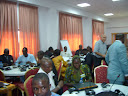
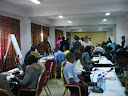
In a plenary session bright and early I laid out the plan for the day. We started off with three parallel chat shows, moved to three parallel world cafes and finished off with a speed geeking session.


The three parallel chat shows focused on the following three themes:
  • Agricultural value chain development
  • Rural and agricultural finance and rural enterprises
  • Support to capacity building

During the chat show participants shared their insights, experience and knowledge about the various challenges and opportunities of the above themes. For many, this was the first time they had participated in a chat show and most of them thorougly enjoyed it.

At the end of chat show the hosts quickly formulated three questions based on the insight that emerged from the chat show. These questions were then addressed during the World Cafe.

Your reporter had the daunting task of acting as cafe host for all three parallel world cafes. I must admit this was quite challenging also because I had to set up the cafe tables for one of the group. Encouraged by the enthusiasm of the participants, I started with the first group outlining the process. 5 minutes later I went to the second group and did the same. I then rushed upstairs to third group.

The hosts of group three were absolutely marvelous and had explained the process to the participants. Drenched, I headed back to the secretariat for a sip of water.
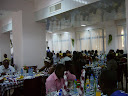
The cafe host is also the time keeper. So 20 minutes into the first round of questions, I did my rounds to ask colleagues to move table and get on with their second question. I must admit that everyone collaborated and they moved orderly to the next table, trying their utmost to keep 5 to table.

The hosts of group 3 had done their maths right and had managed to have 5 francophone and 5 anglophone tables!!! The participants in all three cafes were completely engaged. I heard comments such as: "This cafe thing is really good". Another person said: "You know, I was a skeptic, but this structured chaos is really great!". Someone else reflecting on the process said "I wish we had started by asking the participants to talk about their successes, because when we did that at the last round, the energy level changed." And this person right, the question is one the important ingredients of a world cafe, it can make it or break it.

I am currently immersed in a series appreciative leadership courses, so his comment resonated completely with my changed mindset. He was right on: we always need to start looking at strengths and build on these, rather than falling in the trap of looking at weakness.

After lunch, participants regrouped in their original table to do the summary of their discussions. These were then used for the speed geeking. An hour later, a total of 30 table hosts descended to the open area, carrying flipcharts or their flipchart papers. They created their stands waiting eagerly to present their table's work to other participants.

I think the speed geeking could have gone a bit better, if before the participants made their way downstairs, we would have reminded them what was expected from the table hosts and from the other participants. This said, the outputs were remarkable. I walked to three stands and must say I was quite impressed.
Kudos to tmy colleagues who fully embracing the concept of using knowledge sharing methods at their events. This is now the second time. Early this year, they used the same knowledge sharing methods at another workshop.

For your reporter, it was an absolutely rewarding day. I hope colleagues back home got a flavour of the richness of this day. Hope I've done justice to the great work that went on today.

Now, we are all getting ready for a well deserverd dinner somewhere near the beach. If you feel inspired, please comment on this blogpost.

Monday, 16 November 2009

World Summit on Food Security (#wsfs09) show is on the road!


The World Food Summit on Food Security will officially start in less than 45 minutes. The FAO building is buzzing. The angels in orange T-Shirts are colleague colleagues and delegates to get on-line. Journalists have started filing their first reports.

In the press area we have live feed from Viale Aventino to keep track of arrival of dignitaries. You can follow the proceedings at http://www.fao.org/webcast/ and on twitter http://twitter.com/#search?q=%23wsfs09