Wednesday, 17 February 2010

Interview with CNN anchor Jim Clancy: How has social media changed mainstream media

This week I had the honour and pleasure to meet CNN's Jim Clancy. Yesterday, I asked if I could interview him about social media. Jim, being very modest, said he does not know much about social media.... But I can tell you he knows A LOT and he's an advocate for social media.

This morning he kindly agreed to grant an interview. You can't imagine my excitment. A little nobody interviewing the famous Jim Clancy.

It was a pleasure to work with Jim. He is such a pleasant and humble person.

Monday, 18 January 2010

The unique challenges of #Haiti’s emergency logistics

Over the last days I’ve been so frustrated by media reports out of Haiti pointing fingers at aid workers and my UN colleagues. I’m lucky enough to have a sister who did her doctoral thesis on logistics of humanitarian organization during disaster response. So I asked her to write a piece explaining the complexity of a relief operation in Haiti’s context.

Here is what she had to say:


As the aftermath of the Haiti earthquake unfolds, the media highlights the lack of adequate response by humanitarian organizations to the needs of the population. ‘Logistics’ and ‘coordination’ are often named as the two areas where humanitarian organizations have failed in. But don’t humanitarian organizations have the experience to mobilize relief resources and stage an adequate response? After all they have been confronted with large-scale and complex disasters such as the 2004 Tsunami and the Iraq and Afghanistan emergencies before. So, what can explain the delay in relief efforts by humanitarian organizations? I will first try to illustrate how humanitarian organizations operate and then put their efforts into the context of the Haitian earthquake.

The operations of humanitarian organizations
Most humanitarian organizations typically specialize in one area of relief assistance (food, medicine/medical assistance, shelter, non-food items, etc.) and/or population group (children, refugees, etc.). They are usually not involved in rescue efforts which are conducted by specialized national emergency teams or military forces. Therefore, they cannot be expected to respond to all the needs of all the survivors. What is even more important to appreciate is that the success of any disaster response effort does not fall squarely on the shoulders of humanitarian organizations. This is because humanitarian organizations do not operate in a vacuum but depend on a number of stakeholders to stage their disaster response.

For each disaster, a humanitarian organization establishes its own emergency supply chain. This disaster-specific supply chain consists on a number of activities to be carried out by a range of actors. Humanitarian organizations can be retained responsible for the timely activation and coordination of these activities that continue to depend on the capability and contribution of seven networks of actors. These are the media, donors, relief item suppliers, recipient country, neighboring countries, military forces, and implementing partners. The media through coverage of a disaster often activates an emergency supply chain and is a source of information on its development. Donors provide funds, goods, services and people. Donors together with private sector suppliers provide relief items. Donors, recipient country, neighboring countries and military forces provide logistics assets. Implementing partners, that is the local and foreign NGO community, typically acts as distributors.

In terms of activities, soon after a disaster, a humanitarian organization carries out a group of activities. With a view to plan its relief effort, it assesses the needs of the population and prepares an initial appeal targeted at the donor community to mobilize resources. After having mobilized cash, people, services, information, relief items and in-kind donations, it ensures their transportation to the disaster site. Both procured and solicited in-kind donations are stored in warehouses before distribution to the population. It is worth noting that planning does not occur once, that is, at the outset of a disaster but is a continuous activity.

The humanitarian community has long identified coordination and logistics as two critical areas for disaster response success. The UN’s Office for Coordination of Humanitarian Affairs (OCHA), established by the UN’s Secretary General in 1998, functions as a coordination platform for the humanitarian community during all emergencies. OCHA provides a number of common services to the humanitarian community. It is the secretariat for four coordination mechanisms and tools: the Consolidated Appeal Process, the Central Emergency Relief Fund, the UN’s Disaster Assessment Coordination teams, the Humanitarian Information Centre and Military and Civil Defense Unit.

The complexity of more recent humanitarian crises has led to the unbundling of logistics from generic coordination. For over a decade, the humanitarian community activated a specialized temporary facility: the UN Joint Logistics Center. To ensure predictable leadership and accountability in key disaster response areas, in December 2005, the policy making organ of the humanitarian community, the Inter-Agency Standing Committee (IASC), endorses the cluster approach which implies the activation of clusters in nine key areas, each to be led by a humanitarian agency. Given its experience in emergencies, the World Food Programme (WFP) is designated as the lead agency not only in the areas of food assistance but also logistics and emergency telecommunications.

Haiti before and after the earthquake
Now let us step back and take stock of the Haitian reality prior to the disaster and the effects of the earthquake on the country.

Haiti is the poorest country in the Western hemisphere and ranks 148th of 179 countries on the United Nations Development Programme Human Development Index. Prior to the disaster, out of approximately 8.5 million Haitians, one million was already dependent on foreign aid. Haiti does not have any military force which implies lack of army and military assets (e.g. heavy duty equipment, helicopters). Due to the history of the country, some of the functions of the government and its institutions have been overtaken and carried out by a host of NGOs.

The epicenter of the destructive earthquake which struck Haiti on 12 January 2010 is 22 km from the capital city of Port-au-Prince and 15 km from the other major urban centers; the most densely populated area of the country. (The capital city alone accounts for 2 million people). The earthquake is estimated to have killed 200,000 people and left behind an unparalleled number of severely injured survivors requiring medical attention and assistance. An approx. 3 million survivors, most of which inhabitants of shanty-towns, that is, the poorest of the poor, require everything from water, food to shelter and psychological support. As the quake has hit the capital city, government, UN, NGO community and private sector operators have all suffered from human losses and damage to their infrastructure such as offices, shops and equipment. The port, airport and the road network are severely damaged. The capital city’s water supply and electricity systems have collapsed, leaving millions of people without access to safe water. Only one hospital in the city appears to be functional. With a disbanded police force and significantly reduced UN security workforce (100 staff still unaccounted for), there is no force to ensure safety and security.

A logistical nightmare
The response of the international community to the disaster is heartening both in terms of speed and size. Therefore, there is no question of goodwill or lack of resources to stage a relief effort despite the fact that the daily needs - from food, water to shelter - of 3 million people and medical care to the injured have to be met. An effective response is being held back by the logistical challenges confronting those on the front-line. Operators deployed for the occasion are aware of how these challenges can quickly trigger into mass revolts, further undermining any possibility of an orderly relief effort.

What becomes clear from the above is that humanitarian organizations cannot be held responsible for logistical failures. The sheer infrastructure devastation left behind by the earthquake and lack of local manpower and equipment to remove rubble from roads and repair critical infrastructure undermines significantly the speed and scale of any relief efforts to be staged by the humanitarian community.

Luckily, soon after the disaster, the damaged airport control tower was repaired to allow aviation operations to resume. Given the limited size and capability at the Haiti airport, the humanitarian community obtained the necessary authorizations to fly relief items to the Dominican Republic. However, the international response to the disaster has congested the two airports delaying the delivery of key equipment and supplies even to the aid operators already on site. Given longer repair times, the port continues to be out of use. As a result, vessels already at the coast are not in a position to off-load their cargo of relief items.

Lack of on-site transport assets such as trucks and dwindling supply of fuel further limits the ability of humanitarian organizations to transport goods from the airport towards the population. Moreover, given the overall destruction, the humanitarian community requires time to identify storage centers and set up secure and safe distribution centers. As mentioned above, usually the large UN relief organizations depend on the NGO community for distribution of relief items. As the earthquake has also affected this particular set of actors, the humanitarian organizations need to fly-in or identify qualified staff to man these centers. Finally all the above has to be carried out in an insidious and volatile security environment.

Coordination in the context of a dominating donor
Response to a logistical nightmare is effective coordination. The success of the humanitarian operations depends on i) how well the community manages the logistics bottlenecks caused by limited infrastructure and high demand on its use, and ii) how effectively it can prioritize the movement of people and goods necessary to avert any social uprising.

In its lead capacity on the logistics cluster, throughout the Haiti crisis, WFP will manage the passenger air service, provide information on the transport network and coordinate the operations of the humanitarian organizations among each other and that with the Government of Haiti. Given the huge contribution of the US through its military, it also needs to coordinate and de-conflict the humanitarian community’s response with that of the US military. This leaves behind private and bilateral donations. As far as the EU is concerned, Italy appears to take on the coordination role among European countries. It is unclear who will deal with the other donations, which if not coordinated will only add to the chaos and aggravate the situation at key entry points such as airports and ports.

The speed and scale of the US’s response to the disaster in terms of funds, goods and military support is unprecedented. This is both a blessing and a curse. It is a blessing as the US military will have the means to reestablish a safe and secure environment for humanitarian organizations to operate in and bridge the command and resource gap left behind by the Haitian government. It is a curse as with its huge resources it will dominate the relief effort, overshadowing others, and monopolize the use of the limited logistics assets as exemplified by the current ‘exclusive’ use of the Haitian airspace.

Conclusion
I hope by now we can all appreciate the complexity of humanitarian response during disasters. Humanitarian organizations are not only conditioned by the environment in which they operate, but also by the actions of other actors. In Haiti, they are operating against all odds. But let us hope that donors with resources required by humanitarian organizations actively participate in the coordination initiatives led by the UN. This is the only way to ensure that relief activities are coordinated, assets are shared and the use and movement of resources are prioritized, thus meeting the needs of the population.

Ramina Samii

Read more at http://www.insead.edu/facultyresearch/centres/isic/documents/TsunamiversusHaiti.pdf


About the Author
Ramina Samii currently works for the OPEC Fund for International Development (OFID), an international development financial institution. Before joining OFID, Ramina worked as a researcher at INSEAD, the international business school. During her time at INSEAD, she conducted research on several topics including supply chain management with particular emphasis on humanitarian logistics. Her research resulted in the publication of articles in academic and practitioner journals as well as numerous case studies. It also constituted the basis for her doctoral thesis entitled: Leveraging Logistics Partnerships: Lessons from Humanitarian Organization.
Ramina holds a PhD in management from Erasmus University, Rotterdam School of Management and a Laurea degree in economics and business administration from the University of Rome, Italy.


Post-script
I hope the readers find this blogpost informative and provide their comments. This way I can show my skeptic sister, that social media is indeed useful and an immediate way of getting your message and knowledge to a wide audience.

Friday, 11 December 2009

Impact of climate change on Eritrean agriculture sector

As world leaders gather in Copenhagen to seal the deal on climate change, I saw, first hand, the devastating consequences of climate change on Eritrea’s agriculture and livestock sector.

Crop cultivation and animal husbandry account for 60 per cent of rural incomes in Eritrea. Recent models and estimates show that the effects of climate change have an adverse impact on the country’s agriculture and livestock sector. Decrease in rainfall and a rise in temperatures has resulted in increased dry spells and decreased soil moisture.


Water scarcity is one of the many challenges that farmers and pastoralist face in Eritrea. The country has two perennial river systems, the Setit River, which forms the country’s border with Ethiopia and drains into the Nile basin, and the Gash Barka system, which collects the run-off water from the highlands. All other rivers in the country are seasonal and carry water only after rainfall, which means that they are dry most of the year. The country has limited sources of fresh surface water, and although groundwater can be tapped, it may be s quantity and quality may be poor.

Official estimates show average annual rainfall at 400-500mm. However, for the last two years, average rainfall has not exceeded 100mm.

Investing in blue gold improves livelihoods of smallholder farmers

To counter the devastating impact of climate change and to ensure food security for its people, the government of Eritrea is investing in the agriculture sector by:


  • creating small-scale irrigation schemes
  • building ponds, reservoirs and dams
  • installing solar panels for water pumps
  • installing drip, pump and sprinkler irrigation systems

For example in Zoba Debub the livelihoods of 82% of the 750,000 people living in this zoba depends on agriculture and related activities. Farmers in Debub like in Ma’ekel and other areas of Eritrea plant cereals such as wheat, barley, sorghum, taf, millet, maize and also vegetables – tomato, onion, carrot, potato, cabbage, lettuce and pepper.

In drought-prone Eritrea, livestock is a farmer’s most valuable asset. Animal husbandry is not only one of the main sources of livelihood for farmers, but it is also a form of insurance that enables poor rural people to cope with drought and other disasters.

One of the many challenges facing Eritrean farmers and pastoralists is to find grazing land and water for their livestock. The reservoirs and the surroundings provide an invaluable source of water and grazing land for livestock.

If you’ve ever visited Eritrea, you will be familiar with its arid landscape. You can imagine my surprise when driving through zoba Ma’ekel and -zoba Debub, against an arid and dry landscape, literary out of the blue I saw a beautiful body of water surrounded by hectares of emerald green and lush vegetation. These mini-oasis which are the result of Eritrean government’s investment in agriculture are THE source of livelihoods and food security for poor rural Eritreans.

The reservoirs can hold anywhere between 50,000 to 350,000 m3 of water and serve 200 to 350 poor rural households who are now able to irrigate their 15-35 hectares of agricultural land. Furthermore, the reservoirs and dams provide a secure source of grazing and water for livestock and also source of water for domestic/washing purposes.

These secure source of blue gold allow farmers to complement their rain-fed crops - cereals, sorghum and barely - with vegetables such as tomatoes, lettuce, cabbage, carrots, onions and pepper.

Eritrean farmers use a variety of irrigation methods ranging from drip to pipe and sprinkler and religiously adhere to the agreed irrigation schedule. Thanks to a favourable government policy, they have the luxury of not paying for water. However, they pay an average of 10,000-15,000 nakfa for a pump and those who have a fuel-run pump benefit from subsidized fuel.

The farmers are cognizant that their livelihoods depends not only on water, high yielding seeds and high-value crops but also on making sure that their pumps are well maintained. To this end they’ve established a revolving fund which is used exclusively for this purpose.

“Thanks to the reservoir now I have a secure source of water and can irrigate my 0.25 hectare”, says Woldo a farmer living in the Shmangus-laalay village. “Now I have three crops instead of one.” Woldo uses a combination of sprinkler and water pump. “When my crop was germinating, I used water pump, because sprinklers can damage the crop”, says Woldo. Woldo’s water pump is run by electricity for which he pays 24 nakfa per hour.

The 350 households living in the vicinity of this reservoir use this body of water not only to irrigate their plots, but also for their livestock and for domestic purposes such as for washing.


Before the reservoir was built, Elsa a mother of three, used to wake up at crack of dawn to go fetch water for washing purposes. Today, in tow with her donkey and her youngest son, she goes to the lake to collect water. While the water collecting technique may be rudimentary, it has saved Elsa hours of walking, allowing her to spend more time at home and to get involved in agricultural activities.

In the nearby village of Tesazege village, Athaneta and her brother are cultivating 0.5 hectare of land using the nearby reservoir. “I practice crop rotation and for this crop cycle I’ve replaced barley with tomatoes, because I have a secure source of water”, says Athaneta with a smile. “I’ve already harvested 100kg and expect to harvest another 200kg which I sell for 2 nakfa per kilo”.

“Thanks to this secure source of water, my brother and I can be sure to have one cereal crop and two vegetable crops”, says Athaneta.

Habtemariam is a model farmer who has fully taken advantage of the nearby reservoir and exploited the potential of his 0.75 hectare land, managing to secure himself and his family a total 5,000 nakfa by planting cabbage, lettuce and carrot.

Eritrea has the potential of having many more lush, green-emerald mini-oasis allowing more farmers to systematically cultivate agricultural land, ensure their food security and earn a secure income.

The Eritrean government and donor agencies are investing and committed to invest more in agriculture. Now, the onus is on the world leaders gathered in Copenhagen to finally seal the climate change deal, so that Eritrean women, children, men, farmers and pastoralists can have a bright future and never again suffer from drought and famine.


Please sign the climate change deal so that these children and this Eritrean family and many more have a better and brighther future!

Wednesday, 2 December 2009

Slowly but surely knowledge sharing methods are making a signficant dent

Over the last weeks I was on cruscade to convince colleagues to use a series of knowledge sharing methods for a regional event. This morning I saw the results of my efforts.
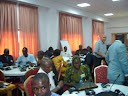
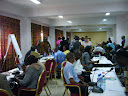
In a plenary session bright and early I laid out the plan for the day. We started off with three parallel chat shows, moved to three parallel world cafes and finished off with a speed geeking session.


The three parallel chat shows focused on the following three themes:
  • Agricultural value chain development
  • Rural and agricultural finance and rural enterprises
  • Support to capacity building

During the chat show participants shared their insights, experience and knowledge about the various challenges and opportunities of the above themes. For many, this was the first time they had participated in a chat show and most of them thorougly enjoyed it.

At the end of chat show the hosts quickly formulated three questions based on the insight that emerged from the chat show. These questions were then addressed during the World Cafe.

Your reporter had the daunting task of acting as cafe host for all three parallel world cafes. I must admit this was quite challenging also because I had to set up the cafe tables for one of the group. Encouraged by the enthusiasm of the participants, I started with the first group outlining the process. 5 minutes later I went to the second group and did the same. I then rushed upstairs to third group.

The hosts of group three were absolutely marvelous and had explained the process to the participants. Drenched, I headed back to the secretariat for a sip of water.
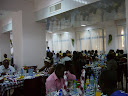
The cafe host is also the time keeper. So 20 minutes into the first round of questions, I did my rounds to ask colleagues to move table and get on with their second question. I must admit that everyone collaborated and they moved orderly to the next table, trying their utmost to keep 5 to table.

The hosts of group 3 had done their maths right and had managed to have 5 francophone and 5 anglophone tables!!! The participants in all three cafes were completely engaged. I heard comments such as: "This cafe thing is really good". Another person said: "You know, I was a skeptic, but this structured chaos is really great!". Someone else reflecting on the process said "I wish we had started by asking the participants to talk about their successes, because when we did that at the last round, the energy level changed." And this person right, the question is one the important ingredients of a world cafe, it can make it or break it.

I am currently immersed in a series appreciative leadership courses, so his comment resonated completely with my changed mindset. He was right on: we always need to start looking at strengths and build on these, rather than falling in the trap of looking at weakness.

After lunch, participants regrouped in their original table to do the summary of their discussions. These were then used for the speed geeking. An hour later, a total of 30 table hosts descended to the open area, carrying flipcharts or their flipchart papers. They created their stands waiting eagerly to present their table's work to other participants.
I think the speed geeking could have gone a bit better, if before the participants made their way downstairs, we would have reminded them what was expected from the table hosts and from the other participants. This said, the outputs were remarkable. I walked to three stands and must say I was quite impressed.
Kudos to tmy colleagues who fully embracing the concept of using knowledge sharing methods at their events. This is now the second time. Early this year, they used the same knowledge sharing methods at another workshop.

For your reporter, it was an absolutely rewarding day. I hope colleagues back home got a flavour of the richness of this day. Hope I've done justice to the great work that went on today.

Now, we are all getting ready for a well deserverd dinner somewhere near the beach. If you feel inspired, please comment on this blogpost.

Monday, 16 November 2009

World Summit on Food Security (#wsfs09) show is on the road!


The World Food Summit on Food Security will officially start in less than 45 minutes. The FAO building is buzzing. The angels in orange T-Shirts are colleague colleagues and delegates to get on-line. Journalists have started filing their first reports.

In the press area we have live feed from Viale Aventino to keep track of arrival of dignitaries. You can follow the proceedings at http://www.fao.org/webcast/ and on twitter http://twitter.com/#search?q=%23wsfs09

Sunday, 4 October 2009

KM search and rescue operation: Looking for intelligent and KM-enabled indicators!

I'm faced with the challenge of measuring the progress and impact of knowledge management activities using indicators!

I must confess that indicators and I do not get along very well. I believe indicators are one-dimensional and not flexible enough to assess progress in a multidimensional manner. Another reason why I do not like indicators is that often they are devised and used to justify our deeds.

Having said that I am fully aware that as development workers we need to show how tax-payer money is used to make a difference in the lives of poor and marginalized people. As a result, we are continuously preparing progress reports, case studies, impact assessments, results-frameworks, logframes and you name it to show progress and impact.

I beg your indulgence for a minute and want to ask you to reflect on how many of these reports, case studies, results-frameworks, logframes and indicators are knowledge enabled? Which of these outputs actually tell the story of what worked and what did not worked and more importantly WHY it did not work? Which of these indicators actually measure the learning and innovation that may or may not have occurred? What indicator measures whether the learning emerging from an activity is captured, disseminated and fed back?

I do not have an answer to these questions and would like to hear from those of who may have plausible answers. What I do know is that I am asked to come up with KM indicators and I have really a hard time to do so.

When it comes to KM indicators, I continuously ask myself: if KM activities are to support the mission of organizations while enhancing business processes, why should we have KM specific indicators?

If we have mainstreamed KM in our activities and if we have intelligent and KM-enabled indicators, these should be able to tell us whether the KM activities are supporting business processes, we should be able to assess whether we are sharing, using, capturing and generating knowledge. We do not need to have a completely new set of indicators to measure the impact of KM! DO WE?

I know the big IF is having "intelligent and KM-enabled indicators"! This is why it is paramount to have intelligent indicators that measure not only the physical progress of any given activity but also and most importantly measure learning and behavioural aspects. That is to say, something that tells how and what we've learnt as a result of accomplishing any given activity; how we've used and are using what we've learnt; something that provides evidence if we're re-inventing the wheel and/or show how we're applying the knowledge generated or acquired.

If we start going down the path of creating KM specific indicators without embedding these in existing indicators, we'll end up engaging in bean-counting exercise and risk creating futile and empty indicators such as "number of communities of practices (CoP) established" or "70% increase in CoP participation" or "30% increase in number of learning events" or "14 knowledge products produced".

Now, you tell me where is the real essence of KM in these indicators? Do any one of these indicators assess the quality of discussions and learning emerging from the CoP, do they tell us how the collective knowledge of the CoP has improved a project design or introduced an innovative irrigation scheme? Do these indicators measure how the CoP has enhanced knowledge exchange or how the CoP has contributed to expanding the knowledge-base on a topic?

These indicators do not telling us whether there has been any behavioural changes, whether the learning events have led to innovative processes and products or if and how they have fostered knowledge exchange etc.

What are these 'indicators' really measuring? JUST NUMBERS!!! They fail to measure the qualitative dimension of HOW results were achieved and WHAT we learnt as a result of achieving and not achieving the desired results. So, can anyone out there tell me why should we create KM specific indicators? Would not it be better to convert dim-witted indicators to KM/learning-enabled indicators?

Help me in this search and rescue operation..... share your intelligent and KM-enabled indicators or any ideas and experience that you may have of measuring the impact of KM-related activities.

Monday, 27 July 2009

Battle of giants: Social media, web 2.0 vs letters to editors and press releases

The other day I came across a beautiful and inspiring quote by George S. Patton "If everyone is thinking alike, then somebody isn't thinking."

Reading this quote made me realize that if I am not thinking like everyone it does not mean I am completely crazy, but it actually means I am thinking….

I've been thinking about how Web2.0 tools and social media have democratized the way we communicate and how they have opened up frontiers which only a decade ago were completely closed or perhaps only accessible to a small elite.

Today those who have embraced the philosophy underpinning web2.0 and social media are experiencing unprecedented freedom of speech and thought. This is why some governments are going out of their way to shut down or jam certain social networking sites and web2.0 tools. Little they know about the power of the community and network!

Let's take a trip in the time machine and go back 5 year. In July 2004 if I wanted to share my opinion and views about something I had read or come across I would have had to write a letter to the editor hoping that they would publish it. If I had written something that I thought was earth-shattering and groundbreaking the only way I could get it out was either to publish it in a journal, put it on my personal website which probably no one would have visited or if I was bold enough write an opinion editorial.

It goes without saying that since I am not a big shot nor a movie or rock star, neither my letter to the editor, nor my article and opinion editorial would have been published, resulting in me being highly frustrated.

July 2009, the world has changed and in this particular sense, it has changed for the better. Today, I am on an equal footing as the big shots and the movie and rock stars. I can freely share my insight and views with the rest of the world. I can go on-line and comment on almost anything. I can publish my groundbreaking and earth-shattering thought or aspiration. That is exactly what I am doing with this blogpost. I am in position of power, I can do it and I am not at anyone's mercy!

All of this is possible thanks to web2.0 paradigm, philosophy and thanks to a new way of life. Millions of people are taking advantage of this stuff and making their voice heard within and outside their communities and networks. What is happening is that if they have something good to say, their voice will be amplified exponentially, something that no opinion editorial or letter to the publisher could have ever achieved – even in their respective hey days.

Web2.0 and social media has created the phenomenon of citizen journalism which in turn is challenging traditional journalism. Thanks to YouTube, Blip.Tv, Flickr, Picasa and other tools we have access to documentaries, news, photos which mainstream media would most probably think twice before broadcasting, and yet these are real people-centred stories.

Traditional news/media outlets came to realize the potential and power of social media and web2.0 when they started feeling the blows. Some reacted more swiftly than others. I happened to recently watch 10 minutes of CNN's back report. I found it very entertaining. I watched Ivan Watson, a relatively seasoned CNN journalist "embedded" in a battalion in Afghanistan, showing us around the military camp, trying to tell the audience the human side of the story. What was amazing was their effort to make the piece look rough – so the pictures were grainy, they had done away with the usual script and articulate language. The rabbit in the hat was the "sock water", which Watson explained with some gusto. He explained how the soldiers put a bottle of water in a sock and hang it from their jeep and so that the desert wind can cool it making it drinkable. This was their version of a raw footage and a human story… good try.

Most mainstream newspapers now have their blog section, they are now allowing their readership to comment on their articles and they do not exercise editorial control as much as they used too… So, today, I can comment on virtually anything and no longer need to write a letter to the editor crossing my fingers that it will be published. Yet some people still insist in writing letters to editors and are very disappointed and frustrated when their letter is not published.

What is amazing is when I tell these disappointed people: "so what that the editor did get publish your letter, go on-line and add your comment, there are more people reading on-line comments and more importantly you give others an opportunity to react and comment on your comment", they look at me as if I am an extraterrestrial creature.

It gets worse when I dare say: "believe me pretty soon opinion editorials, press releases, print newspaper – the stuff we know today - will be subsumed by new forms of communication and this stuff will become artefacts for museums". That is when they go berserk and get all geared up to pull out the strait-jacket!

For me these are two instances how thinking like everyone means someone is not thinking. It is understood that the concept of "everyone" is relative…. My web2.0 friends and peers are part of another "everyone" dimension"!

All of us at some point were faced or are facing the challenge of making the "everyone" understand and appreciate the power and, potential of web2.0 and social media. We need good and convincing examples of how web2.0 and social media at work.

President Obama's campaign is a perfect example of social media and web2.0 tools in action. The White House website is another excellent example. Another good resource is Christian Kreutz's article "Exploring the potentials of blogging for development". This morning I came across a great blogpost entitled "Journalism should look to collaboration, not charity" on the Guardian blog – yeh, these guys are cool and have embraced web2.0 and social media.

Also thank God for news and information outlets such as Huffington Post, blogs such as Global Voices on-line and mainstream journalists such as Hala Garani, Rosemary Church, some ABC journalists and others who have adopted web2.0 way of life. Kudos to those journalists who use twitter to interact with their audience.

But yet, despite these examples and thousand othes, we are still faced with the enormous challenge of making the old-timers and the older generation understand the benefit and potential of social media.

These guys resist adopting these tools and way of life, because they see their area of expertise being eroded. Simply put THEY ARE AFRAID OF LOSING TEHIR JOB. Instead of jumping on this band-wagon and bringing in their vast experience, they end up sulking, sitting on the fence, hoping that this movement will die.

So what can we do to make them understand that: (a) the community has a lot to learn from them and is keen to benefit from and want to draw on their vast experience (b) this "thing" is here to stay and will not go away and (c) if they want to survive they better jump on the band-wagon as opposed to trying in vain to derail it, because it ain't going to derail, so they better use their energy positively!

On a bad day, I ask myself whether it is worth the effort to try to conceive the cynics that the old-way of doing business is now history. On these days I think maybe I should just concentrate my energy and efforts in grooming the younger generation – because they (a) have an excellent grasp of this new way of life, (b) I can learn a whole lot from them and (c) together we can do some fun stuff.

But when all is said and done, I really do not want to leave the "older generation" behind, because they too have a lot to offer, so if you know of any useful resource or if you have a rabbit in your hat, please share it. Let's not leave anyone behind!!!